
Technical Reports: AI Critique
File 05: Theater, Kenta Hibiki, 2025
1. 詳細版批評
記述
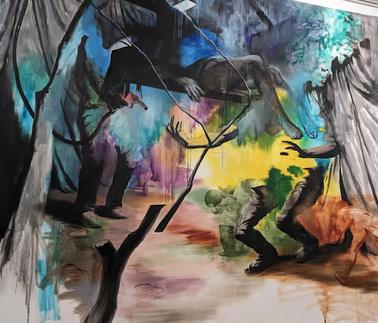
この大画面には、舞台のように断片化した空間が広がり、人間の姿が屈み込み、崩れ、あるいは宙づりのまま、幕や枝、絵具の色雲の中に配置されている。画面を斜めに走る裂け目が構図を二分し、不安定で対立する領域を生み出す。影から突如現れる四肢は、安定した身体が分断されるという無意識的な不安を呼び起こす。左右の幕は劇場のウィングを想わせ、自然ではなく“舞台装置として構築された空間”であることを示す。かがむ姿勢や倒れ込む姿は、外部の圧力によって身動きの取れなくなった社会的弱者のような緊張を示している。
文脈づけ
舞台道具のようなモチーフ—幕、宙づりの身体、役者の影のような姿—は、世界各地の舞台芸術が担ってきた権力・儀式・崩壊の象徴性と対話する。酸性の黄色や緑、煙のような色は、都市の大気や現代的な環境不安を思わせる。作品に支配的存在が描かれていないことは、舞台がしばしば含んできた家父長的な中心性を解体している。壊れた空間と負荷を受ける身体は、グローバル化がもたらす不安定性や移動、サバイバルの経験を反映する。照明の方向や影のつくり方は“誰が見えるのか/誰が隠されているのか”という可視性の政治を示す。
分類
本作は、身体の歪みと環境崩壊を同時に扱う現代の具象—シュルレアリスティックな潮流の中に位置づけられる。分断された身体は、イデオロギー的緊張を浮かび上がらせる政治的な具象伝統を受け継いでいる。むしろ観客を押しつぶすように垂れる幕は、伝統的な舞台の性差的役割を問い直すフェミニズム的再解釈につながる。巨大な画面は、労働・身体・環境への圧力という物質的テーマと直結する。
解明
幕は“見せる/隠す”の二重性を象徴する視覚記号として働く。宙づりの身体は、舞台の中間状態—生と死、主体と客体の間—に置かれた象徴的存在として描かれている。折れた枝がX字状に画面を横断し、観客席と舞台の境界を崩す。色彩はそれぞれの象徴性を引き継いでおり、黄色は不安定な照明、緑は毒性、青は陰鬱を示す。
解釈
この作品は“危機の舞台”という物語を構築し、身体が崩壊しつつある世界を演じている。観客は、これがリハーサルなのか災害の瞬間なのか心理劇なのかを判断できず、解釈が観客に託される。断片化された身体は、外部圧力によって分裂した心性そのものを表す。主題として、個人の主体性と環境の圧倒的力のせめぎあいが中心に置かれている。明確なジェンダー記号が排されており、“誰が演じ、誰が倒れ、誰が支えるのか”というジェンダー化された舞台観を再構築する。
分析
全体を貫く裂け目や霧状の筆致は、不安定という中心テーマを支える。枝、幕、光は“人間に作用するシステムとしての環境”を構成し、身体はその外圧に屈する。屈む身体は、社会構造の中で圧迫される階級的・周縁的存在を想起させる。圧縮された空間は、移動や自由の制限という現代社会の寓意となる。過去の危機図像を継承しつつ、現代の抽象的語彙で再構築している。
評価
本作の価値は、身体の表現と環境の断裂を融合し、観る者を不安定な世界へ巻き込む点にある。マルクス的観点から、身体の痛みを単なる象徴にせず具体的な負荷として提示する姿勢に強さがある。油彩特有の拡散と鋭利なシルエットの対比は高度な技術を示す。ポストコロニアルな視点では、特定の支配的物語を提示せず、全ての身体が“崩れゆく舞台”の責任を分かち合う構図によって普遍的な経験を提示している。
2. 洗練版批評
『Theater』は、幕、煙、色の爆発の中で身体が歪み、崩れ、宙に浮かぶ断片化した演劇空間を構築している。画面を横断する裂け目が明暗を分断し、緊張を生む。部分的にしか見えない身体は一貫して断片化され、舞台は心理的・社会的負荷が可視化された場所へと変わる。枝と幕、そして光は、空間全体の不安定性を一層強調する。
この作品は、現代の具象・シュルレアリスティック表現の流れの中に位置している。黄色・緑・青の工業的な色彩は有毒な大気を思わせ、歪んだ身体は社会的システムの外圧に押し潰される脆さを体現する。ジェンダー記号が排され、誰が“演じ”“苦しむ”のかという固定観念が揺らぐ。宙吊りの身体、折れた枝、濃密な煙は、不安定・移行・拘束の象徴として機能する。
本作の最も強い部分は、身体と環境の断裂をひとつの造形言語にまとめている点だ。光と構造と身体が互いに作用し、画面そのものが圧力の体系として成立する。油彩の質感による霞みと鮮烈な影の対比が画面に毒性を帯びた空気を与える。作品は現代の不安定さを鮮烈に描き出し、「崩れゆく舞台で人はどう立ち続けるのか」という問いを突きつける。
3. 一文批評
世界そのものがセリフを忘れ、役者と舞台がいっしょに崩れていくバックステージの混乱劇。
1. Full-length Critique
Description
The canvas presents a fragmented stage-like space where human figures bend, collapse, or hover amid curtains, branches, and painterly bursts of color. A diagonal tear or crack traverses the surface, dividing the composition into competing zones of opacity and luminosity. Limbs emerge from shadows abruptly, as though severed from stable bodies, which invokes an unconscious anxiety about fragmentation. The curtain-like drapery on both sides mimics theatrical wings and suggests an environment produced by collective staging mechanisms rather than natural landscapes. The figures’ crouching or collapsing poses signal social vulnerability or unrest, as if they inhabit a precarious environment shaped by external pressure.
Contextualization
Theatrical motifs—drapes, a suspended figure, actors-like silhouettes—establish an artistic dialogue with global performance traditions where bodies are arranged to signify power, ritual, or collapse. The environment’s smoky haze and industrial colors—acid yellows, sprayed greens—recall urban atmospheres and contemporary ecological precarity. The absence of any dominant or heroic figure disrupts patriarchal hierarchies often embedded in stage narratives. The staged destruction of space—broken branches, warped floor—may reference global experiences of instability, migration, and survival. The composition’s reliance on artificial lighting logic, not natural light, signals a constructed system of visibility—who is seen, who is shadowed, and who is partially erased.
Classification
The work aligns with a lineage of contemporary figurative-surrealist painting that blends body distortion with environmental collapse. Its fractured bodies echo traditions of politically inflected figuration where the human form becomes a site of ideological tension. The draped theatrical wings, transformed into oppressive structures rather than decorative backdrops, align with feminist reinterpretations of stagecraft, which re-examine the power dynamics behind performance. The large-scale canvas operates like an installation image, engaging materialist concerns about labor, environment, and the physicality of bodies under pressure.
Elucidation
The curtain motif acts as a symbol of revelation and concealment. The hovering body, suspended horizontally, functions iconographically as a figure trapped between performance and collapse—neither fully alive nor fully acted upon. The broken branch forms an X-like barrier, deconstructing the traditional division between stage and audience. Chromatic zones operate symbolically: yellow as unstable illumination, green as toxic residue, blue as melancholic shadow. These symbols are factual conventions rather than speculation.
Interpretation
The painting constructs a narrative of a “stage of crisis,” where bodies act out roles within a collapsing theatrical world. Viewers experience ambiguity—uncertain whether they witness a rehearsal, a disaster, or an internal psychological scene—centering their own interpretive participation. The fragmented bodies channel a psyche fractured by external pressures; the hovering figure suggests a self untethered from stable identity. Thematically, the work stages the tension between human agency and overwhelming environments—the theater as life’s unstable arena. The absence of recognizable gender markers disrupts gendered expectations of who performs, suffers, or supports in staged imagery.
Analysis
Across the canvas, structural fractures and atmospheric bursts feed the central theme: the instability of lived experience. The branches, curtains, and lighting form a system of constraints acting upon the figures. The crouched figures embody classed or marginalized bodies whose labor or suffering happens behind theatrical spectacle. Spatial compression—figures squeezed between hanging drapery and smoky air—operates as a social allegory for constrained mobility within larger social or political systems. The painting inherits from historical crisis imagery but pushes it into a contemporary language of abstraction and atmospheric violence.
Evaluation
The work’s strength lies in how deftly it merges figuration with structural rupture, placing the viewer inside a world shaped by instability. Its Marxist resonance gives weight to bodily distress without reducing figures to symbols of suffering. The material handling of oil—diffuse atmospheres blended with sharp silhouettes—demonstrates high technical intelligence. Postcolonially, the work resists centering any dominant narrative, instead offering a shared, destabilized stage where every body participates in the consequences of global pressures. Its value is in how vividly it externalizes internal and societal fractures through theatrical metaphor.
2. Three-Paragraph Condensed Critique
Kenta Hibiki’s Theater constructs a fractured performance space where bodies bend, collapse, or hover amid curtains, smoke, and abrupt color fields. The composition divides itself through a bold diagonal rupture, creating visual tension between areas of darkness and intense illumination. The figures’ partial visibility emphasizes fragmentation, turning the stage into a field of psychological and social pressure. Drapery functions as theatrical wings, while branches and cracks cut across the space, reinforcing a sense of instability embedded in both environment and identity.
The painting positions itself within contemporary figurative-surrealist traditions, using the stage as a metaphor for lived experience in crisis. Industrial yellows, greens, and blues evoke toxic atmospheres, while the distorted bodies embody vulnerability to systems larger than themselves. The absence of clearly gendered or hierarchical roles reshapes expectations of who performs or suffers, opening the work to feminist and postcolonial readings. Symbolic motifs—the suspended figure, the broken branch, the pervasive haze—operate as recognizable visual codes for uncertainty, transition, and constraint.
What strengthens the work is its merging of bodily expression with environmental rupture. The canvas functions as a system in which light, structure, and gesture hold equal agency, pressing upon the figures as much as they animate the scene. Its material handling—soft gradients offset by sharp silhouettes—gives the atmosphere a volatile, nearly toxic presence. The painting becomes a powerful evaluation of contemporary precarity, using the metaphor of theater to reveal how individuals navigate collapsing stages, both literal and societal.
3. One-Liner
A backstage meltdown where the world itself forgets its lines and the actors crumble with the set.
注:作品イメージとともに,“Theater” by Kenta Hibiki, oil on canvas, 3300mm×3800mmと入力した結果の出力である.詳しいことはFile 01や文献[1]をご参照ください.
[1] T. Arita, W. Zheng, R. Suzuki, and F. Akiba, "Assessing LLMs in Art Contexts: Critique Generation and Theory of Mind Evaluation", arXiv, 2025 (doi: 10.48550/arxiv.2504.12805).